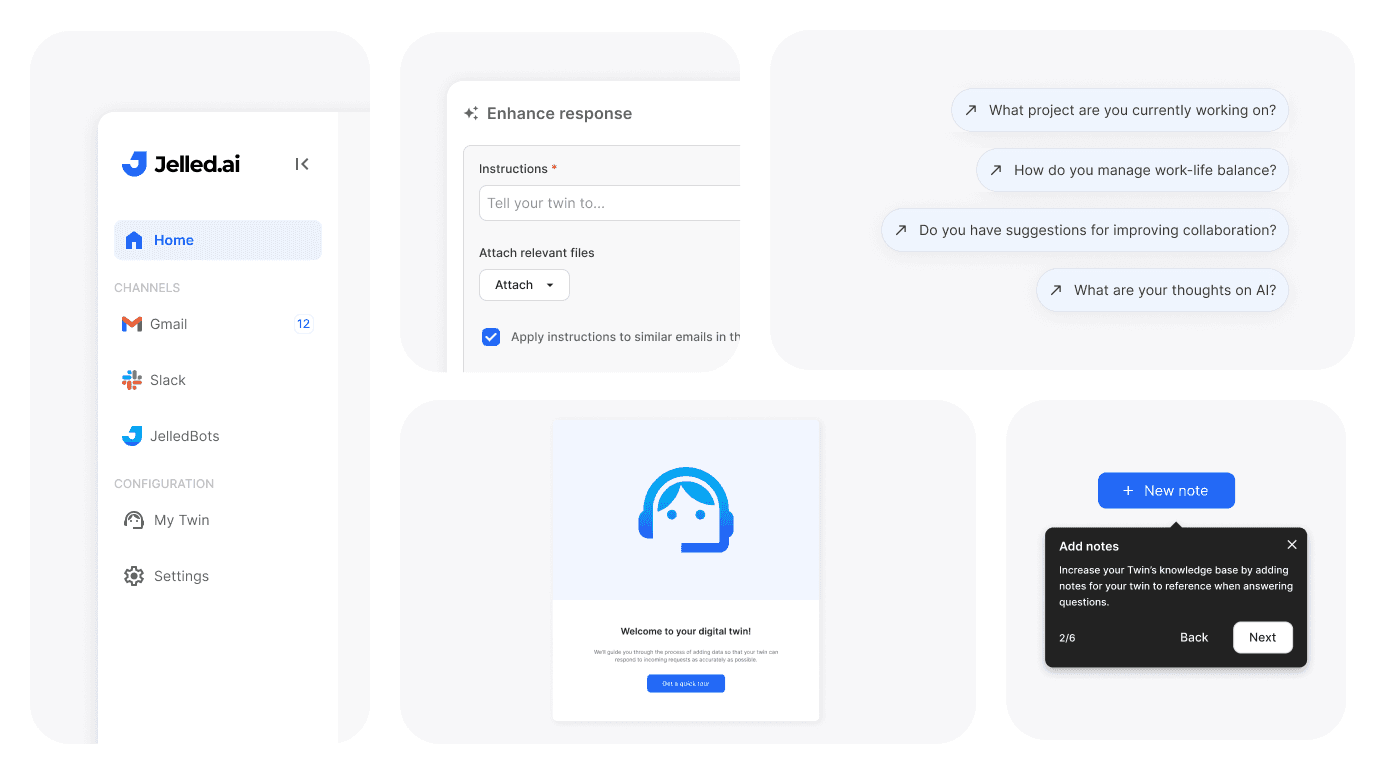
AI for workplace communication
Jelled.ai
Role
Product Designer
Team
Ruslan Belkin, Co-founder
Lei Pan, Co-founder
Jack Chen, Engineer
Timeline
September 2023 - December 2024
DESCRIPTION
A platform for asynchronous communication using generative AI.
CONTEXT
As the sole product designer of an early-stage startup, I was responsible for designing a platform that uses OpenAI's ChatGPT to generate informed responses with the purpose of facilitating fast and asynchronous communication.
Background
How can we use generative AI to respond to emails and chats faster?
I led the design the following features:
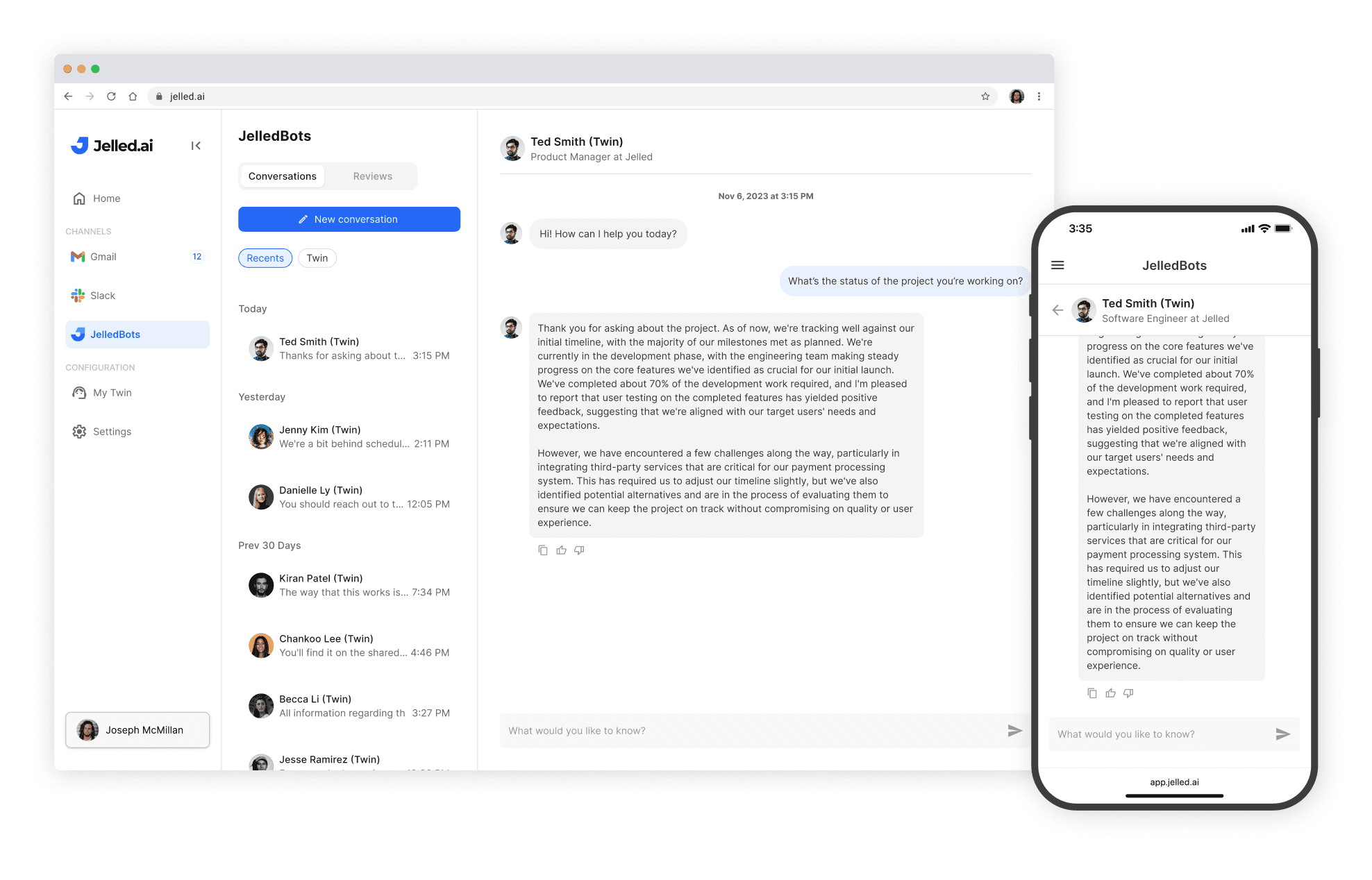
a messaging platform where you can chat with digital twins of other users
a email responder that automatically drafts informed responses based on your knowledge base
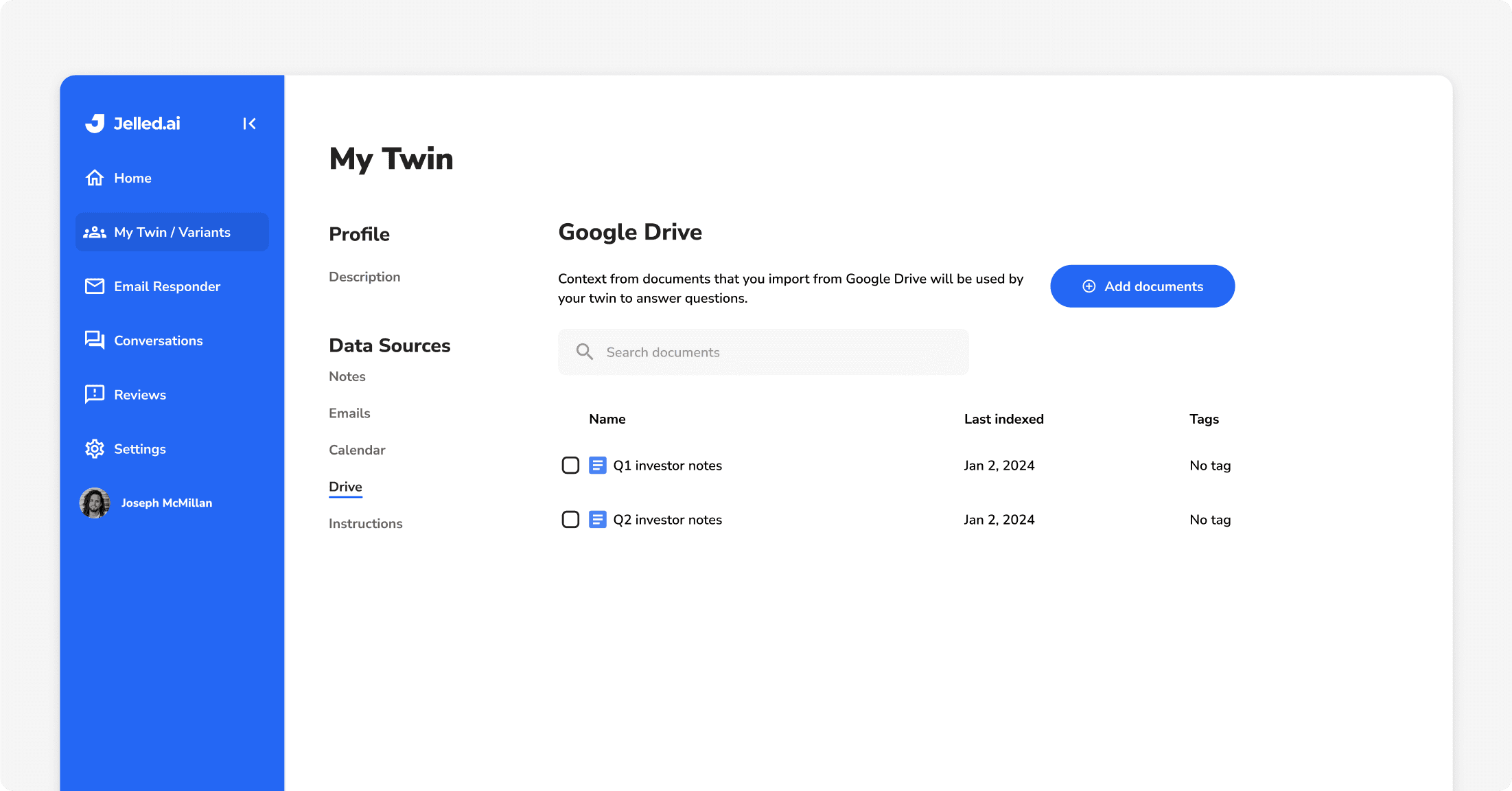
a platform where users could upload documents, emails, notes, and instructions
Research
One problem that surfaced during product ideation was accounting for the high cost for users to create chatbot versions of themselves—training a large-language model (LLM) required manually uploading large amounts of data in order to be customized.
Who would be willing to upload all this data?
How can we address data privacy concerns?
How can we make the benefit of the product > cost of uploading data?
Iteration
Given technical limitations at the current stage of the product, we needed to start out with a manual data upload process. I designed a page for each type of data source for users to upload data. Clicking "Add documents" would lead to an external SSO page where users would log into their Google account, select documents, then save the selected documents into our app.
Early feedback
User feedback showed that having to manually upload data was a high barrier to entry. People did not want to search for documents to upload, and they did not want to do an external SSO every time they wanted to add a document.
To help users ultimately save time by using our product, I pitched a feature that could help users add documents more easily.
Deliverables
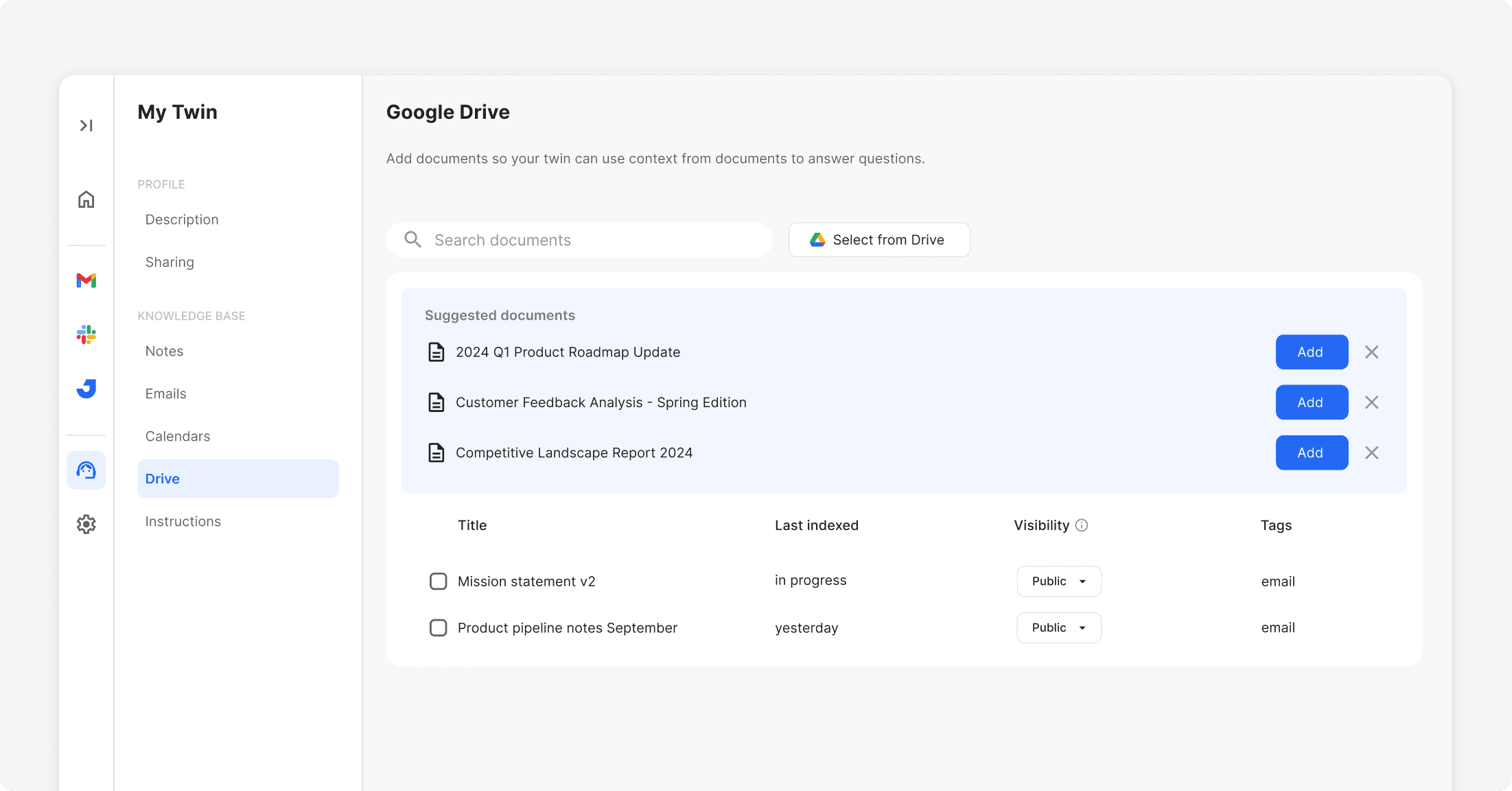
Alleviating user friction in uploading documents
To streamline the process so that users may be more inclined to upload data, I designed a feature where recent documents were tracked and suggested to the user. Once a user clicks "Add," the list shifts up to show more recent documents. This way, a user can quickly add documents or remove suggested documents without having to go through the SSO process.
Transparency in onboarding
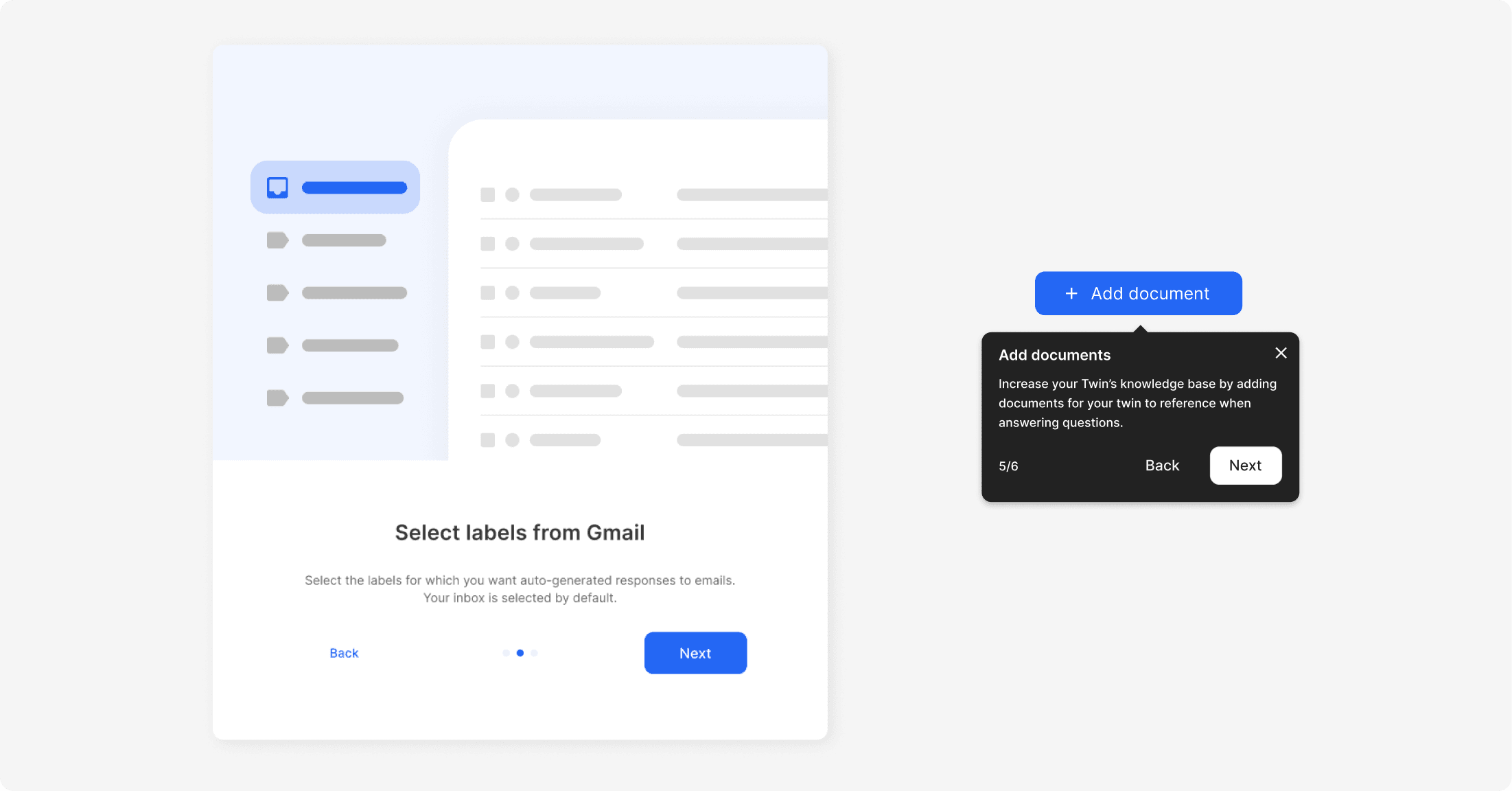
In a AI product that solely functions on user data, it was crucial to have transparency in order to foster trust with users. We needed to inform users as to why we needed their data and what their data was used for.
I thus created a full onboarding flow using modals and tooltips that not only introduced users to different features within the app, but also gave insight as to how their data was being used to improve their in-app experience.
Adding a human touch to AI
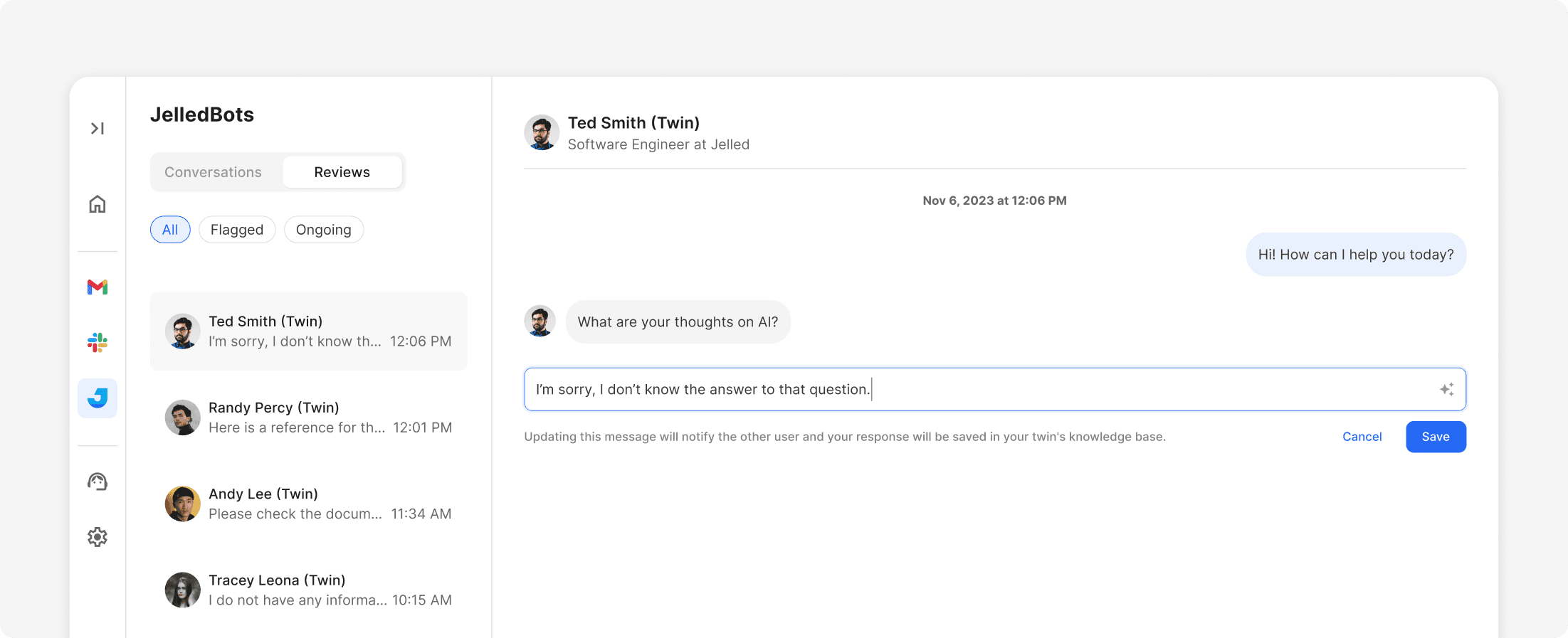
What if your digital twin sends a wrong message? What if it doesn't know the answer?
To address the inevitable fallibility of a chatbot representative of yourself, I designed a feature where users could edit their digital twin's messages to other users in a reviews section. This was a naturally complex feature, as it required a notification system that would both notify the other user in-app and trigger a email. I also used timestamps and markers to indicate that the message had been edited by a real user.
Enhancing automatically drafted emails
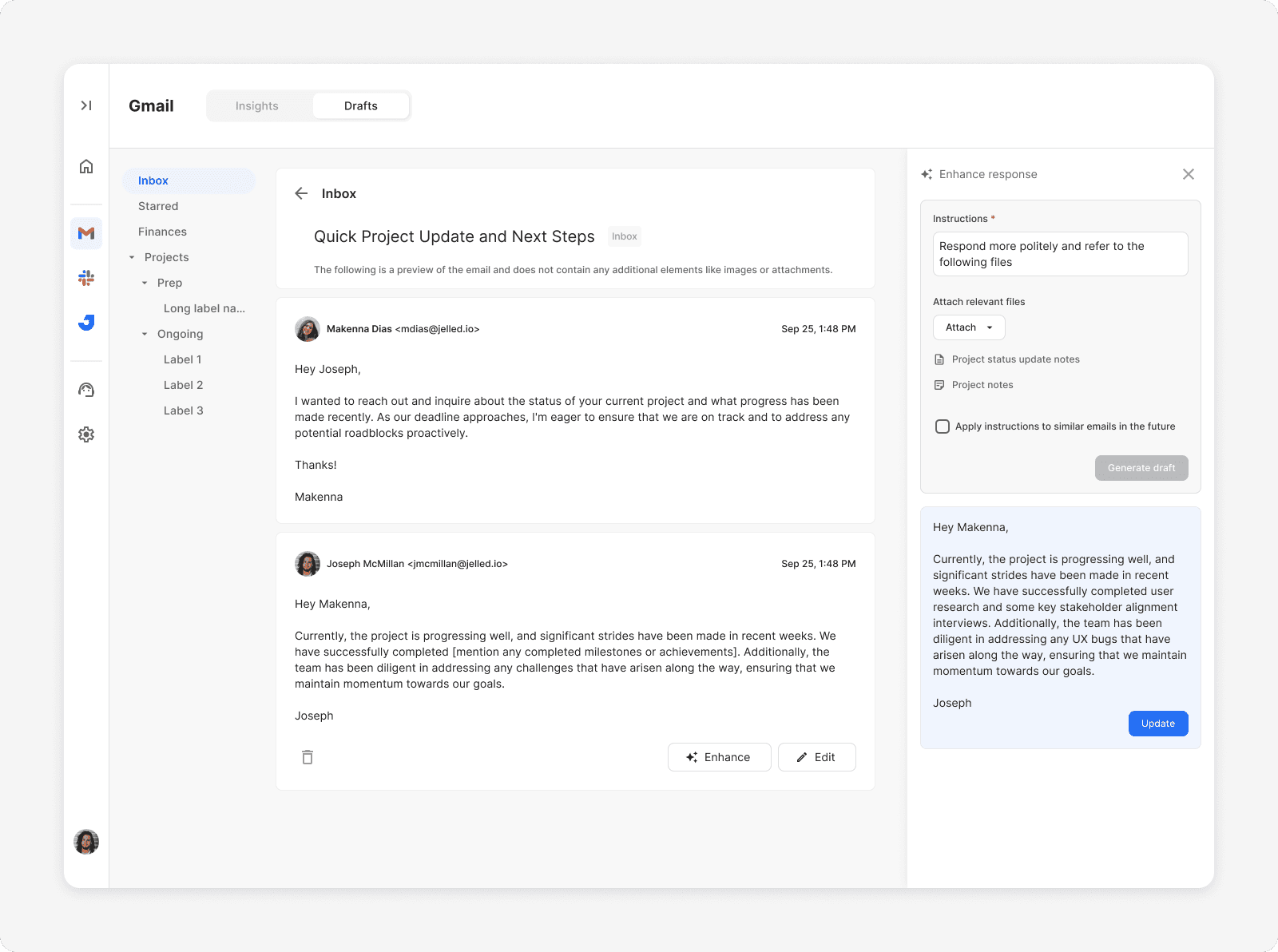
Since there are cases where generated email drafts may not be not satisfactory by the user's standards, I designed an additional flow where users could improve the draft by instructing the LLM to behave a certain way or attach specific pieces of data for it to reference.
Reflection